
Clear thinking for responsible AI.
Practical perspectives. Actionable next steps.
AI transformation in practice
Explore our published perspectives on AI adoption, leadership, governance and connected technology.
 10 August 2026
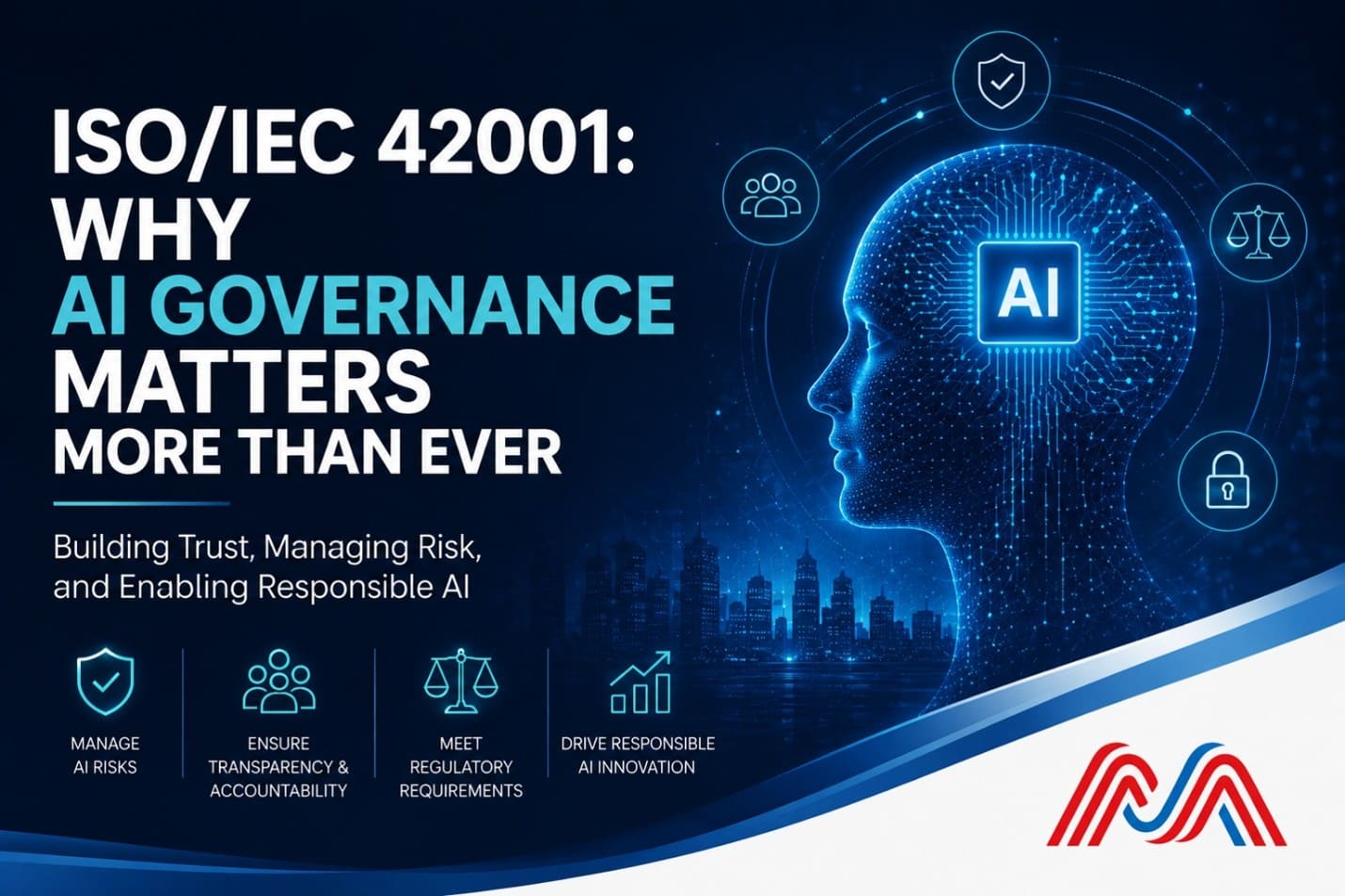
ISO/IEC 42001: Why AI Governance Matters More Than Ever
Artificial Intelligence (AI) is transforming the way businesses operate. From automating customer service to improving healthcare diagnostics and…
Read article ↗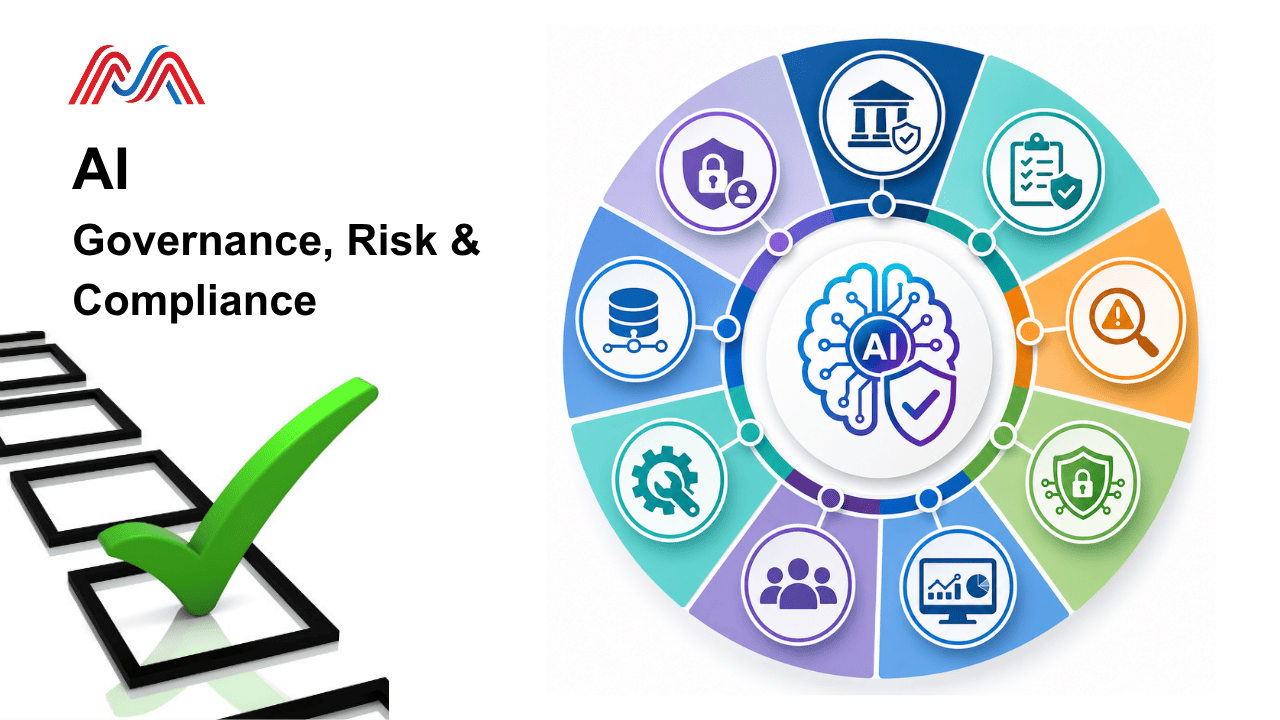 4 August 2026
AI GRC Implementation Checklist: A Complete Guide to AI Governance, Risk Management & Compliance
Artificial Intelligence (AI) is no longer an emerging technology—it is now a strategic business enabler. Organizations across finance, healthcare, retail…
Read article ↗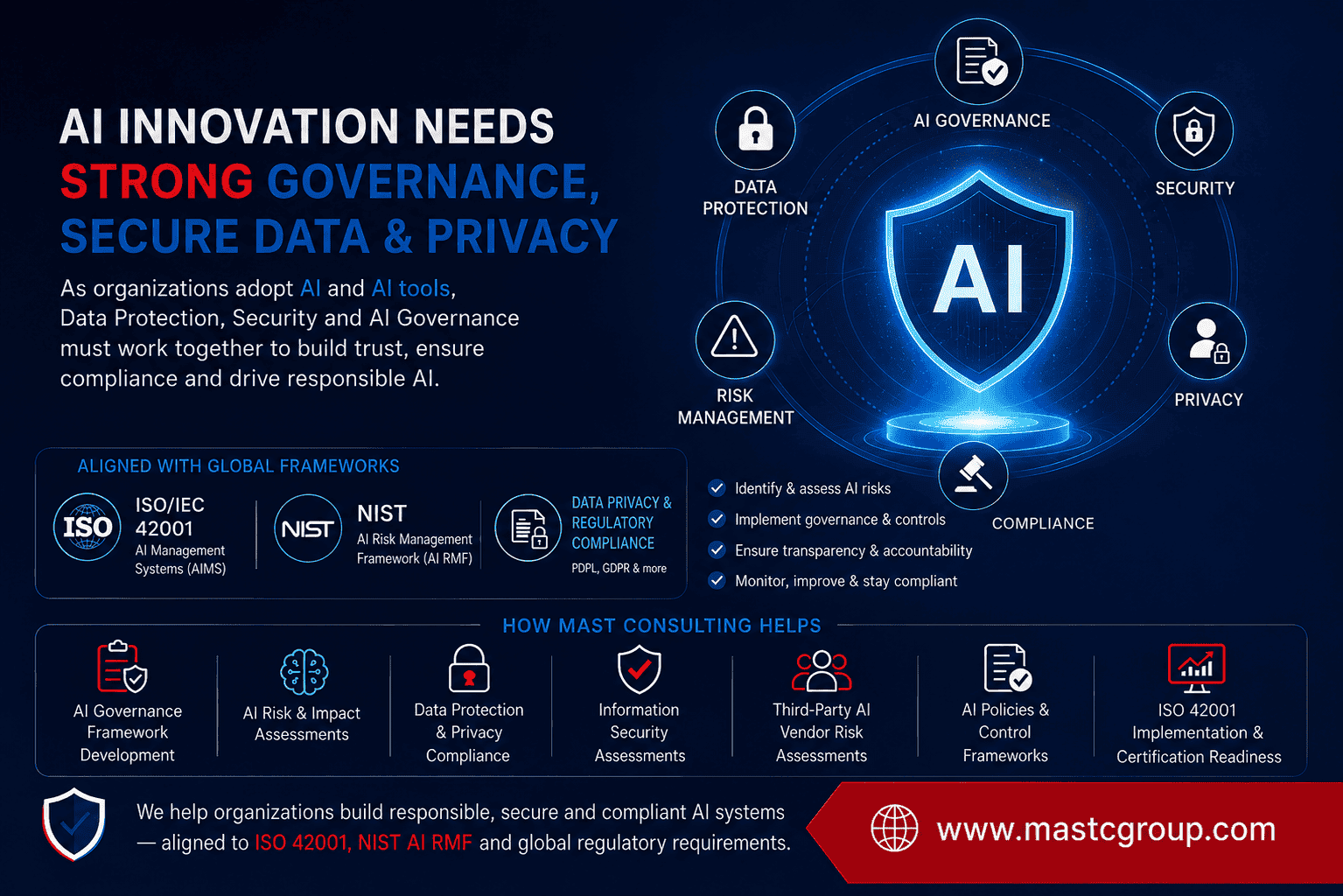 17 June 2026
AI Governance, Data Protection & Security: Three Pillars That Must Work Together
As organizations rapidly adopt Agentic AI, Generative AI, and intelligent automation platforms, many focus on innovation and business outcomes. However…
Read article ↗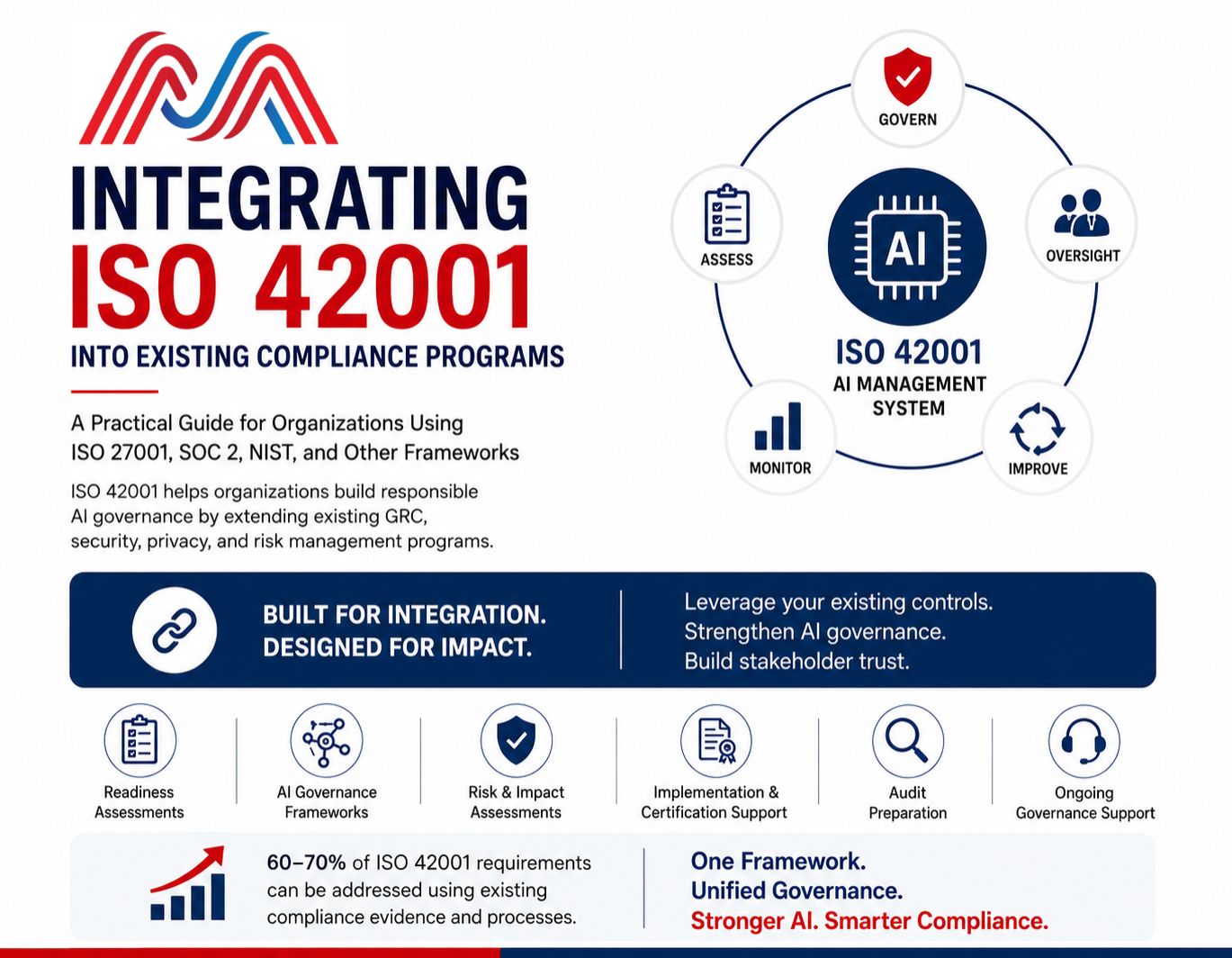 25 May 2026
Integrating ISO 42001 AI Management System Into Existing Compliance Programs
A Practical Guide for Organizations Already Operating Under ISO 27001, SOC 2, NIST, and Other Frameworks Artificial Intelligence is now part of everyday…
Read article ↗ 5 May 2026
UAE Mandates National IoT Security Policy
New regulations from the UAE Cyber Security Council require IoT devices to meet binding security controls. Here’s what you need to know—and how to get…
Read article ↗ 28 April 2026
Operationalizing AI: The New Mandate for Leadership
The emergence of AI has not only transformed how organizations operate, but also how leadership must drive outcomes. For years, leadership was largely…
Read article ↗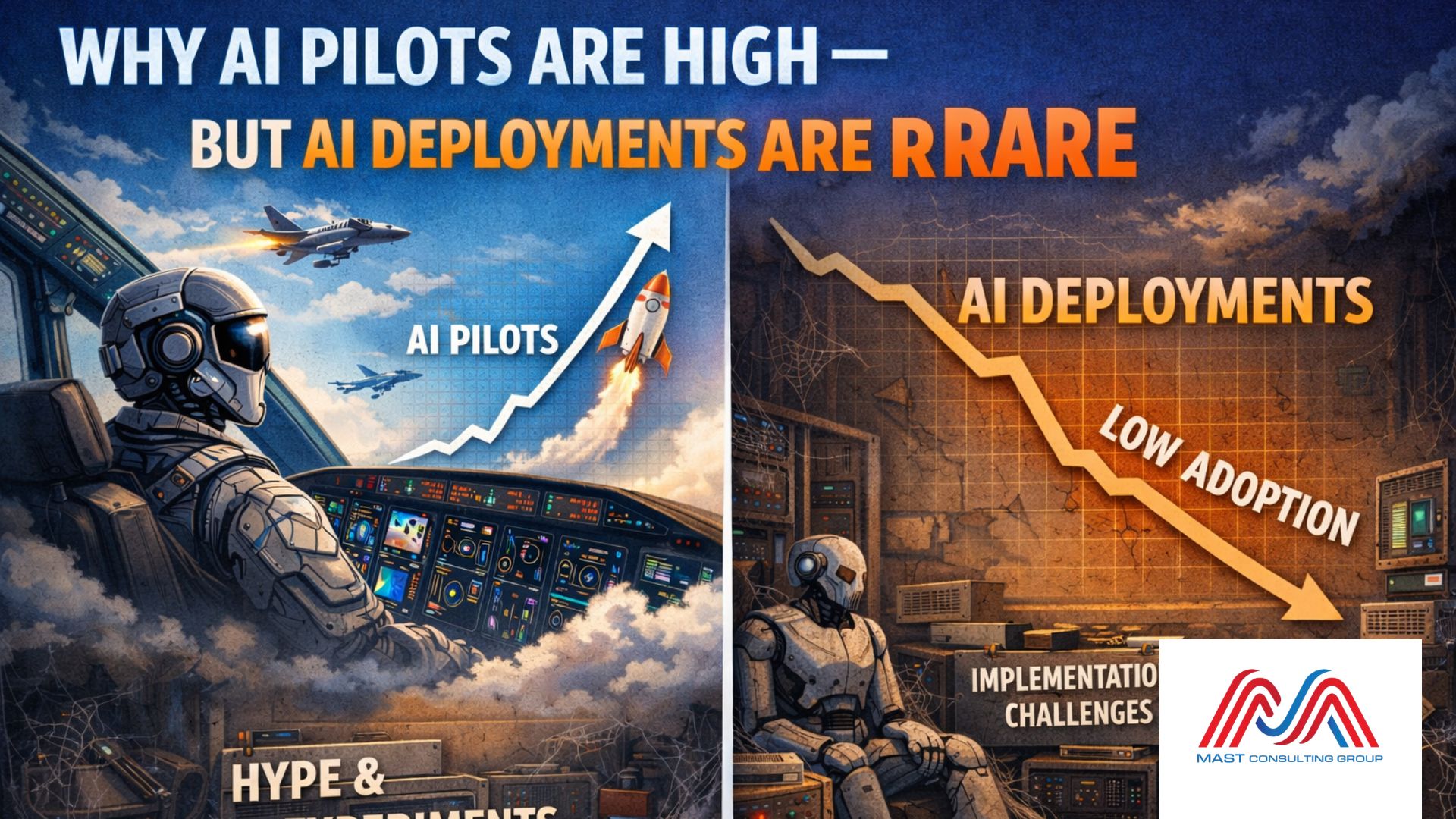 8 April 2026
Why AI Pilots Are High but AI Deployments Remain Rare
Last week, I had the opportunity to sit with some of the UAE’s most forward-thinking leaders during an MIT-hosted roundtable. As expected, AI dominated…
Read article ↗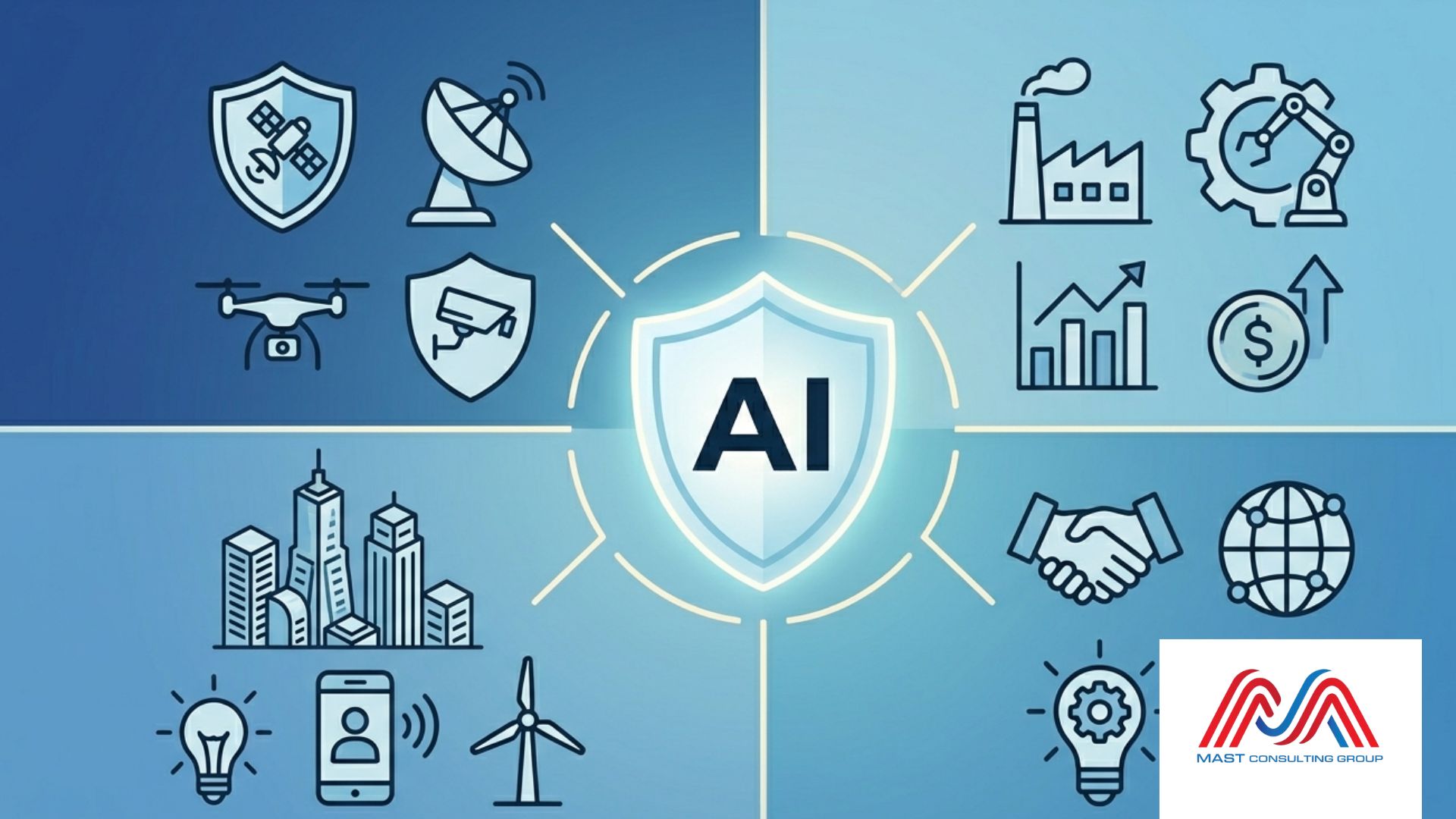 7 April 2026
Why Governments See AI as a Strategic Necessity
AI is one technology that shows no sign of slowing down. The world is still discovering its potential, even as new risks emerge with every advancement…
Read article ↗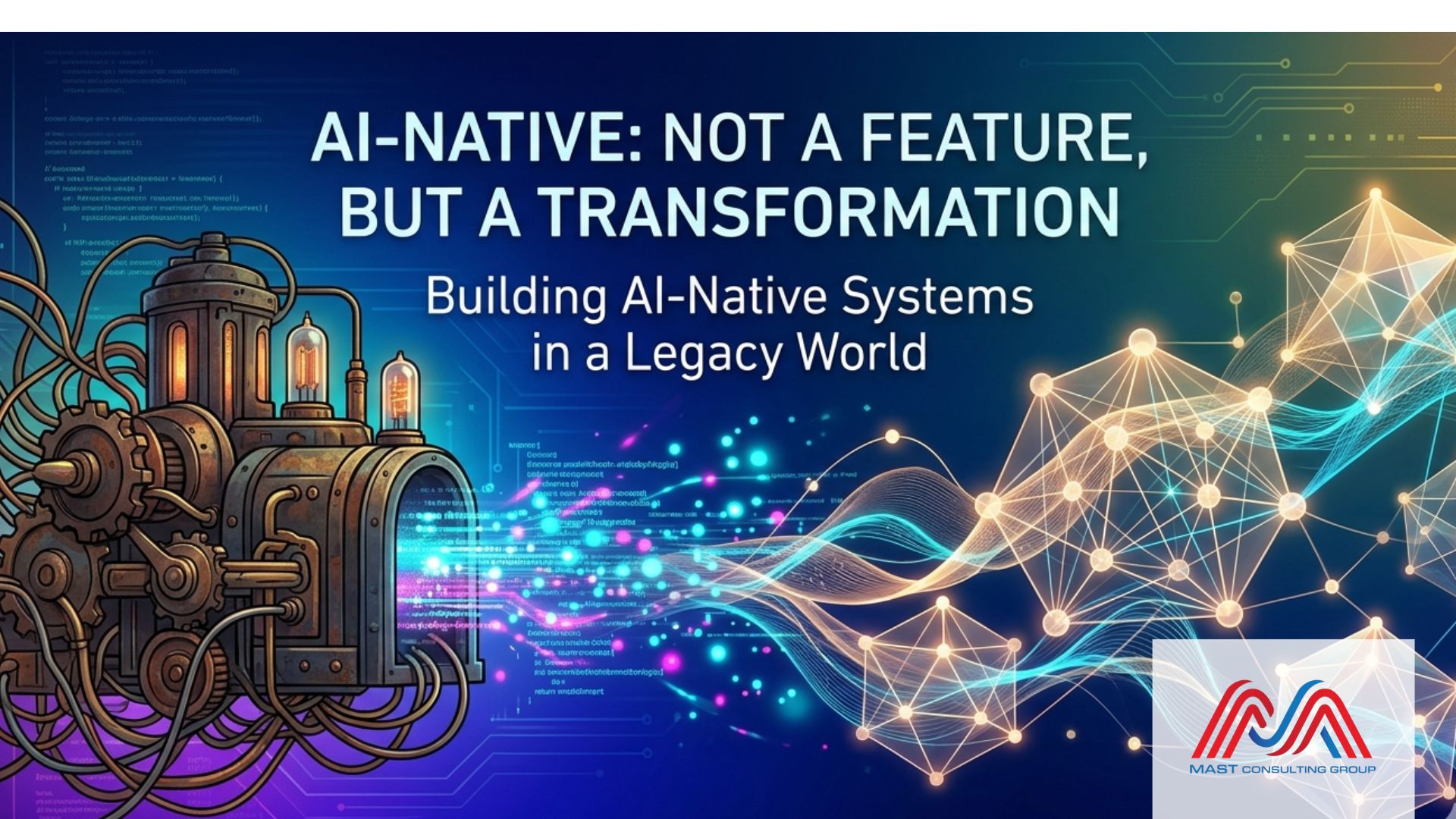 7 April 2026
AI-Native: Not a Feature, But a Transformation- Building AI-Native Systems in a Legacy World
When organizations speak about adopting AI, the conversation often gets directed towards tools, models indicating towards quick wins. But in reality, most…
Read article ↗ 2 April 2026
CBUAE AI Guidance: A Supervisory Signal for UAE Financial Institutions
The Central Bank of the UAE (CBUAE) issued its Guidance Note on the Consumer Protection and Responsible Adoption and Use of Artificial Intelligence and…
Read article ↗From AI adoption.
To AI accountability.
Start with a clear view of your AI governance readiness.
Strategy, transformation and responsible adoption
Start with the decision, not the AI demonstration
A useful AI strategy begins with a business problem that matters. A demonstration can establish technical possibility, but it cannot determine whether the organization should invest.
Read perspective →AI TransformationBuild a roadmap around dependencies
An AI roadmap is more useful when it makes dependencies visible than when it presents a confident list of launch dates.
Read perspective →Responsible AITurn responsible AI principles into review questions
A principle becomes operational when someone knows what to review, what evidence to retain and who makes the decision.
Read perspective →ISO 42001Prepare the AIMS scope before writing policies
A management system needs a meaningful boundary. A scope that omits how AI is actually used makes it difficult to establish relevant objectives and controls.
Read perspective →Generative AISeparate a copilot from an action-taking agent
A tool that drafts text and an agent that changes business records need different controls. Describe what the system can do before choosing the approval path.
Read perspective →AI RiskAssess consequences before assigning a score
Risk scores are useful only when the underlying scenario is clear. A number without a defined event, consequence and affected stakeholder is hard to challenge.
Read perspective →AI SecurityReview the boundaries around connected AI
AI security depends on the wider application, its data and its connected tools. Reviewing the model alone leaves important exposure unexplored.
Read perspective →AI PrivacyTrace personal information through the AI workflow
Privacy review should follow the information from collection to disposal. Prompts, retrieved documents and generated outputs may each contain personal information.
Read perspective →AI RegulationKeep an applicability register, not a universal checklist
Organizations should distinguish legislation, voluntary frameworks and contractual commitments before mapping controls. Geographic presence alone does not answer every applicability question.
Read perspective →AI AssuranceAsk what evidence supports the approval
An approval record is strongest when reviewers can reconstruct the basis of the decision. Assertions should be connected to test results, assessments and known limitations.
Read perspective →AI GovernanceMake ownership visible across the AI lifecycle
Governance works through decisions, not just committees. Every use case needs a clear path from intake to ongoing review.
Read perspective →